DIY Tree Maintenance: What You Can Actually Handle Yourself (And What You Really Shouldn't)
I'm Not Here to Tell You to Call a Pro for Everything
Look, I've been in this industry long enough to know that not every tree task requires a crew and a bucket truck. There are things you can absolutely do yourself — and doing them well makes a real difference in the long-term health of your trees and your property.
But I've also seen what happens when someone takes on more than they should. The chainsaw-and-ladder combination alone sends thousands of people to the emergency room every year. And I've responded to plenty of jobs that started as a homeowner 'just trimming a few branches' and turned into something a lot more complicated.
So here's an honest breakdown. What's reasonable to handle on your own, and where should you draw the line.
When in doubt, reach out to our tree removal company Greensboro NC for expert guidance.
What You Can Safely Handle Yourself
Small Branch Pruning — Anything You Can Reach from the Ground
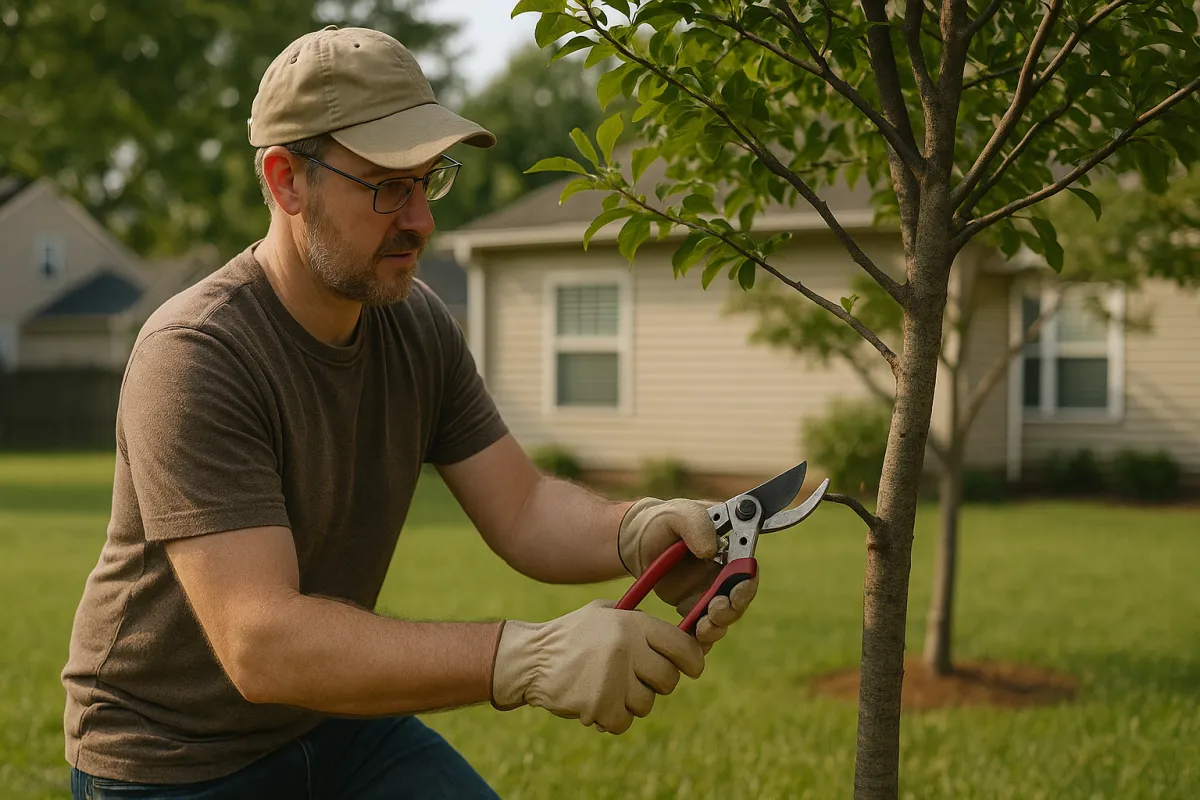
If a branch is under about two inches in diameter and you can reach it safely from the ground — no ladder involved — you can prune it yourself with a good pair of hand pruners or a folding handsaw. The key is making your cut just outside the branch collar, which is the slightly raised ring of tissue where the branch meets the trunk. Don't cut flush with the trunk, and don't leave a long stub. A clean cut in the right spot heals properly. A bad cut in the wrong spot becomes a disease entry point.
Cleaning Up Suckers and Water Sprouts
Those thin, vertical shoots that grow from the base of a tree or shoot straight up from major limbs? You can pull or cut those off yourself any time you notice them. They drain energy from the tree without contributing anything useful, and getting them early makes the job easier.
Mulching the Root Zone
Spreading two to three inches of organic mulch around the base of your trees — keeping it pulled back from direct contact with the bark — is something any homeowner can do and something trees genuinely benefit from. It holds moisture in, moderates soil temperature, and keeps lawn mowers and string trimmers away from the base of the trunk, which is a very common source of low-level tree damage that adds up over time.
Post-Storm Debris Cleanup and Watering
Picking up small fallen branches after a storm, watering young trees during dry spells, and keeping lawn equipment from banging into the base of your trees — all of this falls squarely in the homeowner's wheelhouse. These small habits add up.
What You Should Not DIY — And Why
Anything That Combines a Chainsaw with a Ladder
I want to be direct about this one: this combination is genuinely dangerous. A chainsaw requires both hands, your full attention, and a stable footing. A ladder gives you none of those things reliably. The saw can kick back, the branch can move unexpectedly, and you have nowhere to go. This is how serious injuries happen, and it happens to people who consider themselves handy and experienced. Please don't do it.
Branches Hanging Over Your Home, Car, or Any Structure
When a branch is suspended over something valuable — your roof, your vehicle, a fence, a neighbor's property — the margin for error on the removal is essentially zero. One thing goes wrong with the cut and you've got a branch falling in a direction you didn't plan for, onto something you didn't want it to hit. This type of work requires rigging, technique, and multiple sets of experienced hands.
Full Tree Removal of Any Significant Size
Even a tree that looks small and manageable involves more variables than most people anticipate. The direction of lean, the tension in the wood, root structure, what's in the drop zone, how the tree is going to move when it starts to fall — all of these require training and experience to read correctly. Getting it wrong can mean property damage, injury, or worse. No tree is worth that risk.
Anything Near a Power Line — Full Stop
There's no version of this that's a DIY job. If a tree or branch is anywhere near a power line, contact your utility provider first and then call a licensed tree service. The line may look inactive. It is almost certainly not.
Trees That Are Already Compromised
A tree that's already dead, diseased, hollow, or structurally damaged is unpredictable in ways that even experienced people approach carefully. The wood doesn't behave the way you'd expect. What seems like a simple cut can cause the whole thing to shift or split in a direction no one planned for. If a tree is already in rough shape, it needs a professional evaluation before anyone puts a saw to it.
For jobs that go beyond DIY, trust our licensed tree removal service Piedmont Triad professionals.
Not Sure Which Side of the Line You're On?
The line between a manageable DIY job and a genuinely dangerous situation isn't always obvious from the ground.
If you've got a tree situation and you're not sure which side of that line you're on, give us a call. C Tree Removal Services covers the entire Piedmont Triad and we're happy to come out and give you an honest read before you start.
No pressure. Just a straight answer from people who do this every day.